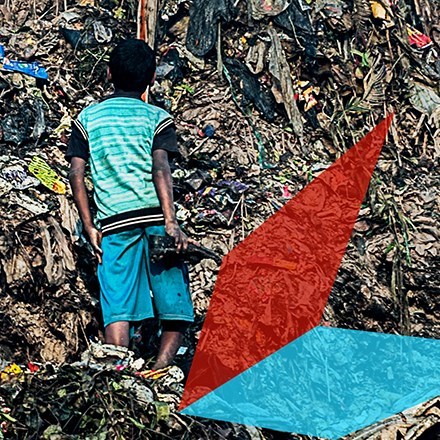
Professor Mark Cladis publishes his latest journal article,"What Remains: Waste, Belonging, and the Work of Home" in the Oxford Intersections: Cultures of Waste collection.
The central question in this article is: How are home and belonging made within sociopolitical systems that sort and discard people and lands? How are home and belonging mutually informed by a logic of waste: sociopolitical structures that sort lives, labor, and lands into what is valued and what is treated as disposable? Waste, here, is not simply discarded material objects. Rather, it is a cultural and political dynamic that regulates forms of belonging—who is allowed to dwell and who is expendable and therefore excluded. Against this, those at the margins engage in life-affirming forms of homemaking, fashioning belonging from that which is marked as disposable. Even in damaged spaces—oppressive domestic spheres, dispossessed lands, queer precarity—homemaking can be a practice that issues a refusal to structures that produce disposable lives, homes, and lands. The article travels along three interrelated paths. First, it examines domestic life, drawing on feminist scholarship to shed light on forms of economic and affective disposability. Next, it turns to diasporic and Indigenous experiences in which displacement and dispossession render people and land as expendable within the nation-state and settler colonialism. Finally, it considers queer forms of homemaking that, in the face of heteronormativity, use what has been scorned and discarded to maintain care and belonging. These paths show that even as powerful sociopolitical systems continually sort and discard, people at the margins make forms of belonging from what those systems try to cast aside.
To read the full article, visit Oxford Academic Press.