Research
Mark S. Cladis
Brooke Russell Astor Professor of the Humanities and Interim Chair
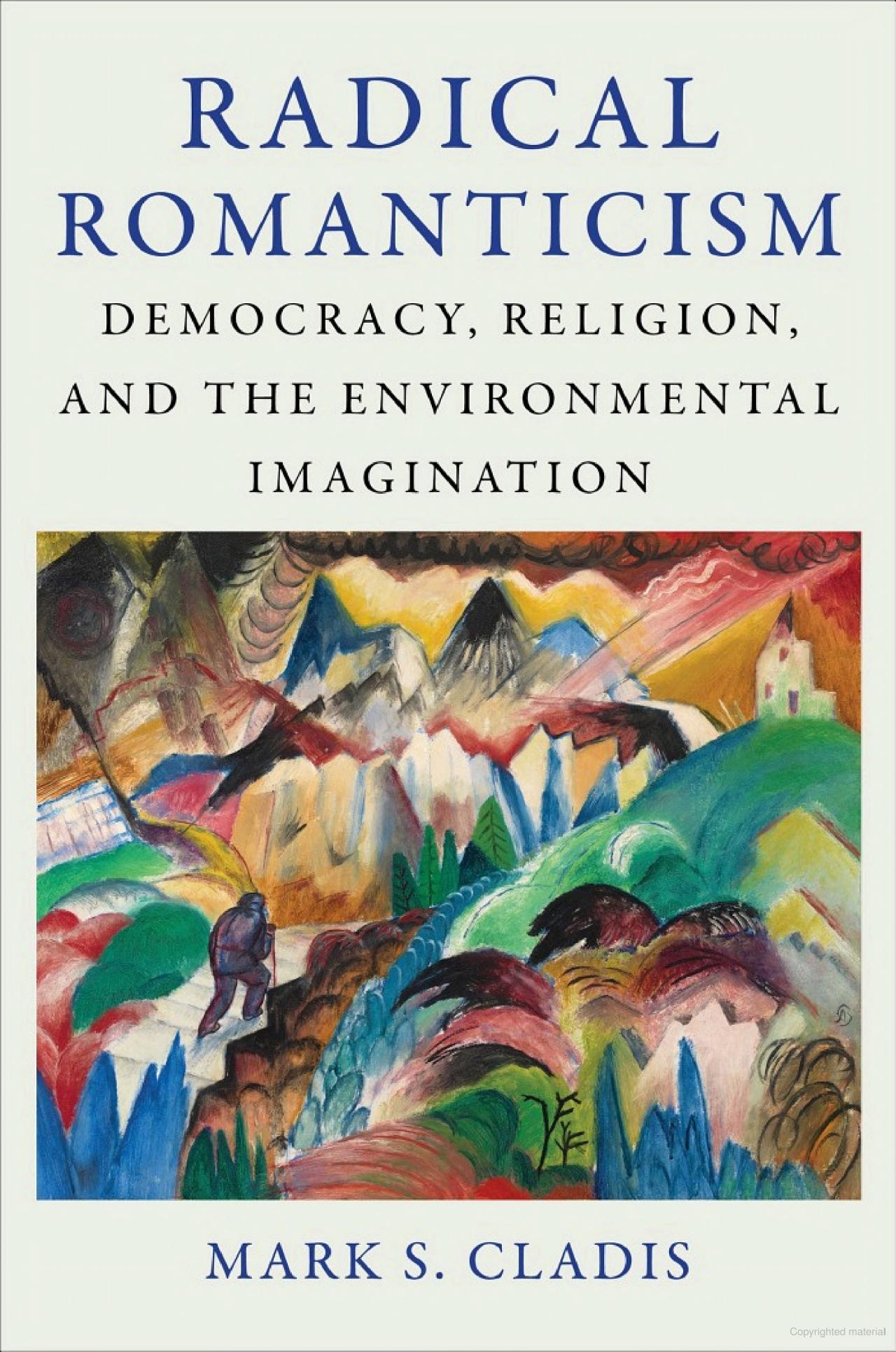
Mark S. Cladis recently published Radical Romanticism: Democracy, Religion, and the Environmental Imagination. He is now actively working on his new book project, Just Home: Place, Belonging, and Justice.
In addition, he is writing a chapter titled “Teaching Environmental Political Theory with a Dual Focus: The Cultivation of Dispositions and the Work of Institutional Change” for an edited volume on teaching environmental political theory. He is also preparing his keynote address, “The Art of Being Addressed: Cavell, Romanticism, and the Practice of Receptivity,” for the upcoming Harvard conference on the philosopher Stanley Cavell.
Recent publications include:
- “Spiritual Democracy,” Political Concepts 2026, Issue 9: The End(s) of Democracy Edition
- “What Remains: Waste, Belonging, and the Work of Home,” commissioned by Oxford Intersections, Oxford University Press
- “A Durkheimian Environmental Social Theory,” in The Elgar Companion to Émile Durkheim, eds. Marcel Fournier & Paul Carls
- “The Presence and Role of Ancestors in Indigenous Cultures, Euro-American Cultures, and Democratic Intergenerational Dialogue,” Religions 2025, 16(5), 649
- “The Black Ecofeminist Storytelling of Zora Neale Hurston,” Resistance: A Journal of Radical Environmental Humanities 11.2–3 (Spring–Fall 2024): 112–134
- “Leslie Silko: Nuclear Landscapes, Environmental Catastrophe, and the Power of Indigenous Storytelling,” Ecokritike 1 (2024): 35–58
Harold D. Roth
Professor of Religious Studies and East Asian Studies;
Director of the Contemplative Studies Initiative and Concentration
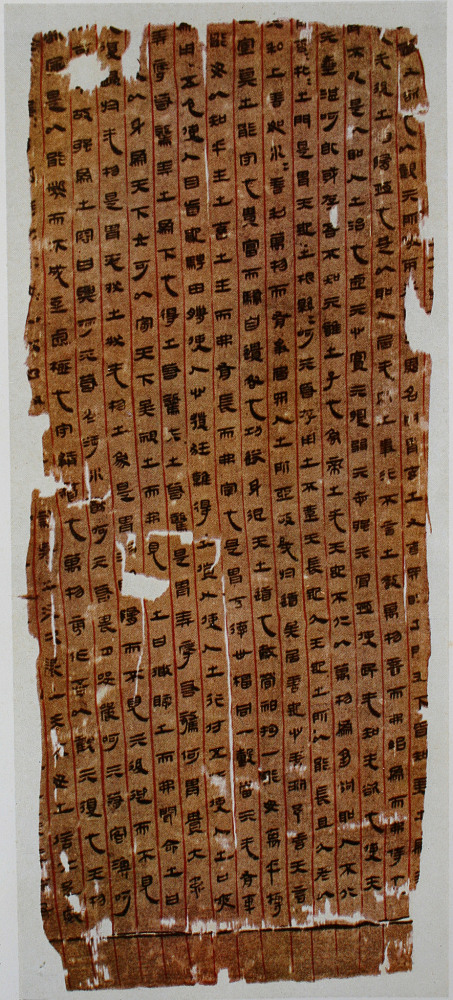
Hal’s primary research throughout his career has focused on Chinese philosophy, textual analysis, and the classical Daoist tradition, where his pioneering work has demonstrated the importance of “inner cultivation” and contemplative practice in the tradition’s foundational works. His seven books and more than fifty scholarly articles include Original Tao (Columbia U Press, 1999), a translation and analysis one of the earliest surviving Chinese texts on breath meditation and contemplative practice, and The Huainanzi: A Guide to the Theory and Practice of Government in Han China (with J. S. Major, S. A. Queen, and A. S. Meyer, CUP, 2010), a thousand-page translation and analysis of “the last great untranslated work of Classical Chinese philosophy,” whose twenty-one chapters encompass what an enlightened ruler needs to govern according to the early Daoist tradition. Other books include The Textual History of the Huainanzi (AAS, 1993) and The Contemplative Foundations of Classical Daoism (SUNY, 2021).
Building on this scholarship, Roth pioneered the academic field of Contemplative Studies and created the first undergraduate concentration in the field at a major North American research university. Supporting this venture in Public Humanities, his publications include “Against Cognitive Imperialism” (Religion East and West, 2008), a critique of conceptual bias in Cognitive Science and Religious Studies, and, most recently, “Critical Subjectivity in the New Field of Contemplative Studies,” his 2023 Oxford Lecture, published in the Yin Cheng Journal of Contemporary Buddhism 2.2 (2026). He is a founding director of the International Society for Contemplative Research (ISCR) and of the Contemplative Education Network (CEN).
A long-time practitioner of Rinzai Zen meditation, Roth edited About Tathāgatha Zen (2014) and Manifesting Zen: Master Dharma Talks from Mt. Baldy (2022), the only authorized books by the late Kyōzan Jōshū Rōshi (Sasaki; 1907–2014). His current projects include creating an accessible archive of Kyōzan Rōshi’s master lectures (teisho) and completing a long-term project on the text and influence of the Dao De Jing, the most famous work of the classical Daoist tradition (with L. DiFiori and AS Meyer).
Janine Anderson Sawada
Professor of Religious Studies & East Asian Studies

Michael Satlow
Dorot Professor of Judaic Studies and Religious Studies
Michael Satlow's research focuses on Jews and Judaism in antiquity, with special interest in social history. His last book, How the Bible Became Holy, explores the reception of the texts that would become biblical and then when and how both Jews and Christians gave it authority. Currently, he is currently finishing a synthetic study of "lived religion" in Late Antiquity. In the third to seventh centuries CE, when Jewish and Christian intellectuals were developing their own distinctive religious identities - in conversation and often conflict with each other and the so-called 'pagan' population - most people had a more fluid and shared understanding of their relationship with deities and other invisible beings.
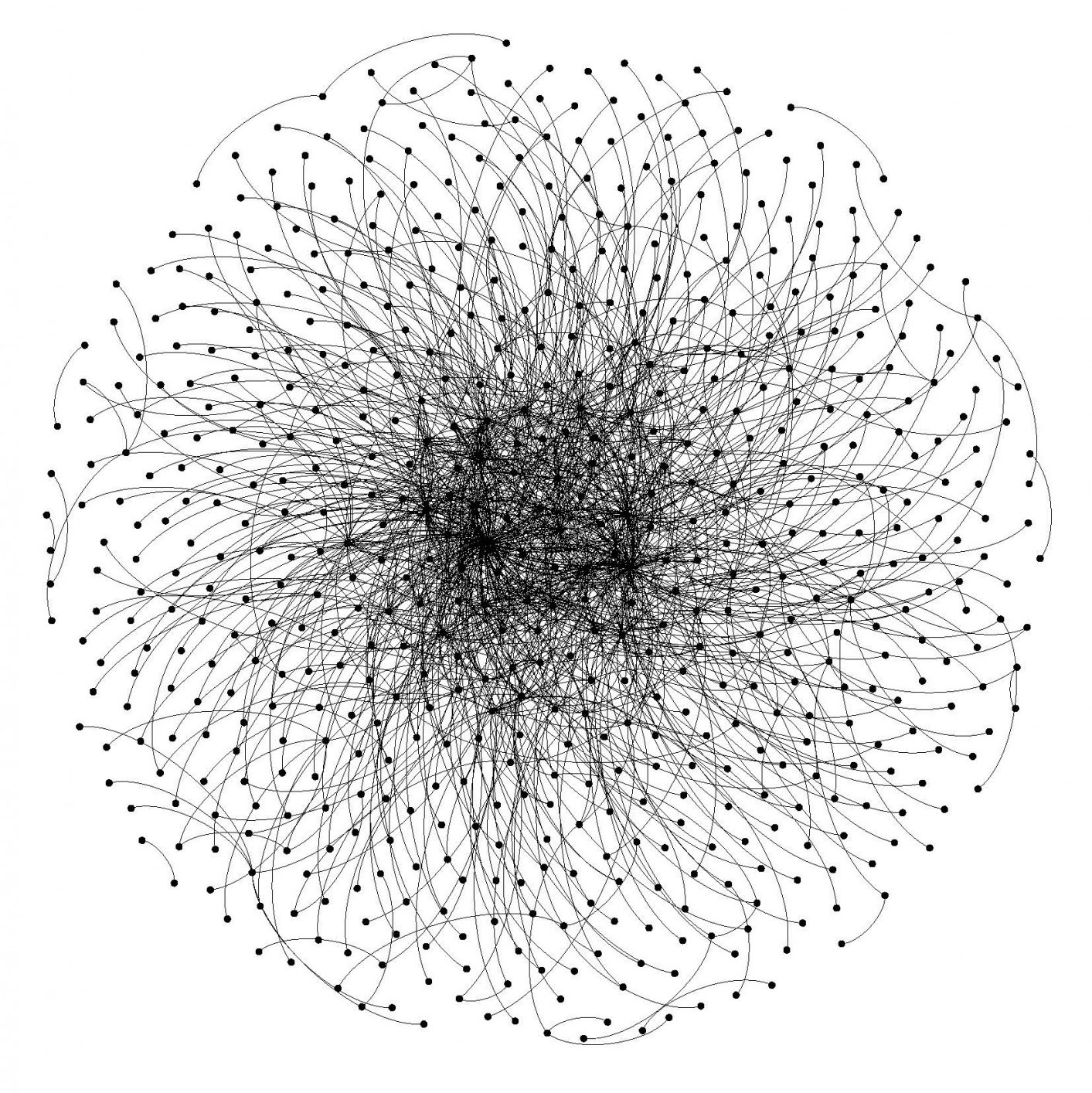
His other area of current research involves digital humanities. He continues to work on a database, Inscriptions of Israel/Palestine and is using network analysis tools to analyze rabbinic literature. He has a special interest in the application of machine learning and generative AI to this literature as well.
Saul M. Olyan
Samuel Ungerleider, Jr. Professor of Judaic Studies, and Professor of Religious Studies
At present, he is writing a new book entitled Animal Rights and the Hebrew Bible, which is under contract with Oxford University Press. In this book, he considers whether there are biblical texts that ascribe an implicit form of legal personhood as well as legal rights to animals and, if so, which rights, to which animals in particular—domesticated, wild, both— and for what purpose? He also explores how the evidence of the Hebrew Bible might contribute to contemporary debate about animal rights in the academy, in the courts, in the public square and in religious communities. He plans to finish the manuscript in 2022 when he is on sabbatical. His recent publications include two co-edited books (Animals and the Law in Antiquity, Brown Judaic Studies, 2021, with Jordan Rosenblum; Pain in Biblical Texts and Other Materials of the Ancient Mediterranean, Mohr/Siebeck, 2021, with Michaela Bauks) and his monograph Violent Rituals of the Hebrew Bible, Oxford University Press, 2019.
Stephen S. Bush
Professor of Religious Studies
Stephen S. Bush is presently working on "Regarding Humans Otherwise: The Aesthetic Transformation of Anthropocene Democracy." This book explores the status of "the human" (and associated terms, such as humanity, humanism, humanitarianism, and human rights) in light of criticisms by ecological thinkers, race theorists, and gender theorists, who hold that the category is implicitly white and masculine and explicitly anthropocentric. But can we conceive of democracy without a special privilege for humans? Drawing from resources in religion, the book argues for an aesthetic transformation (through art, literature, and in the flesh) of how we regard humans, in pursuit of a pluralistic, ecological democracy.
Nancy Khalek
Associate Professor of Religious Studies
Nancy Khalek is currently finishing up a monograph about emotion and pious ethical self-fashioning in the medieval Sunni Near East. The book brings together the history of emotions, medieval Islamic intellectual history, and the study of medieval Arabic texts in order to tease out how traditional ḥadīth in the popular genre of “Exhortation and Dissuasion” reflect and relate to scholarly discourses – in medieval theology and religious ethics – on the nature of emotion and its utility for the formation of religious subjectivity. The book focuses particularly on the centrality of emotions (especially hope and fear) in the construction of non-elite piety in the medieval Islamic world. Once this is complete, she plans to continue bridging between the history of emotion and other genres of medieval Arabic pietistic literature. Recent examples of her work in this area include the chapter on “feeling” in the handbook Critical Terms for Religious Studies and a co-written article on “Embodied Emotions: Sociological and Social Historical Perspectives” in a landmark special issue of Geschichte und Gesellschaft, “Revisiting the History of Emotions.”